
Engagement · Integrated Human Practices · Technical Expertise
Technical Expertise
Dr. Nalini Raghunathan on spatial mismatch, host redundancy, and the controls our construct panel was missing.
Our design problem is not whether FAAH works. It is whether an enzyme made inside E. coli Nissle ever meets a lipid that sits in the gut lumen, on the other side of two membranes, in a region of the intestine where bacteria are scarce. We built a construct panel to answer that empirically, but a panel is only as good as the controls in it, and we are a student team grading our own homework. This part records the one conversation that judged it from outside.
Dr. Nalini Raghunathan, PhD

About her. A researcher and geneticist who holds a Master’s degree in Microbiology and a PhD in Bacterial Genetics, her foundational research focused on E. coli replication and transcription, which is to say, on the organism we have chosen as our chassis, at the level of its basic machinery. She is actively involved in research spanning genetics, clinical epidemiology and the microbiome, and alongside that research she oversees clinical services generating gut microbiome profiles for patients suffering from gastrointestinal disorders. That combination is why we approached her: she is one of relatively few people who works on live biotherapeutics in both a laboratory and a hospital.
Question
We chose to consult Dr. Raghunathan because of her direct expertise in both gastroenterology and live biotherapeutics, bridging the gap between synthetic biology and clinical medicine. Before the session we gathered context on our host organism and reviewed prior work on gut colonization, historical probiotic applications and pediatric malnutrition interventions. Entering the discussion with a solid understanding of those foundational studies let us engage with her at the level of mechanism rather than spend the hour asking her to teach us the basics.
Engagement
3 October 2026 · Webinar
A webinar covering the history and current state of gut microbiome science, followed by a direct and unsparing critique of our design. Her presentation referenced foundational literature spanning historical microbiology and modern gut research: Metchnikoff’s 1904 work on Lactobacillus, Alfred Nissle’s discovery of a protective E. coli, Jeffrey Gordon’s New England Journal of Medicine study on microbiota-directed food interventions in undernourished children, and recent Nature Reviews Microbiology publications on gut microbiota factors.
Finding
Our initial framework treated expressing an enzyme in a probiotic as a direct way to lower satiety signals and raise appetite. Dr. Raghunathan replaced that with a clinical and mechanistic account of what an engineered microbe actually encounters inside a host, and in doing so asked the sharpest questions our project has faced. Three observations go to the heart of the concept.
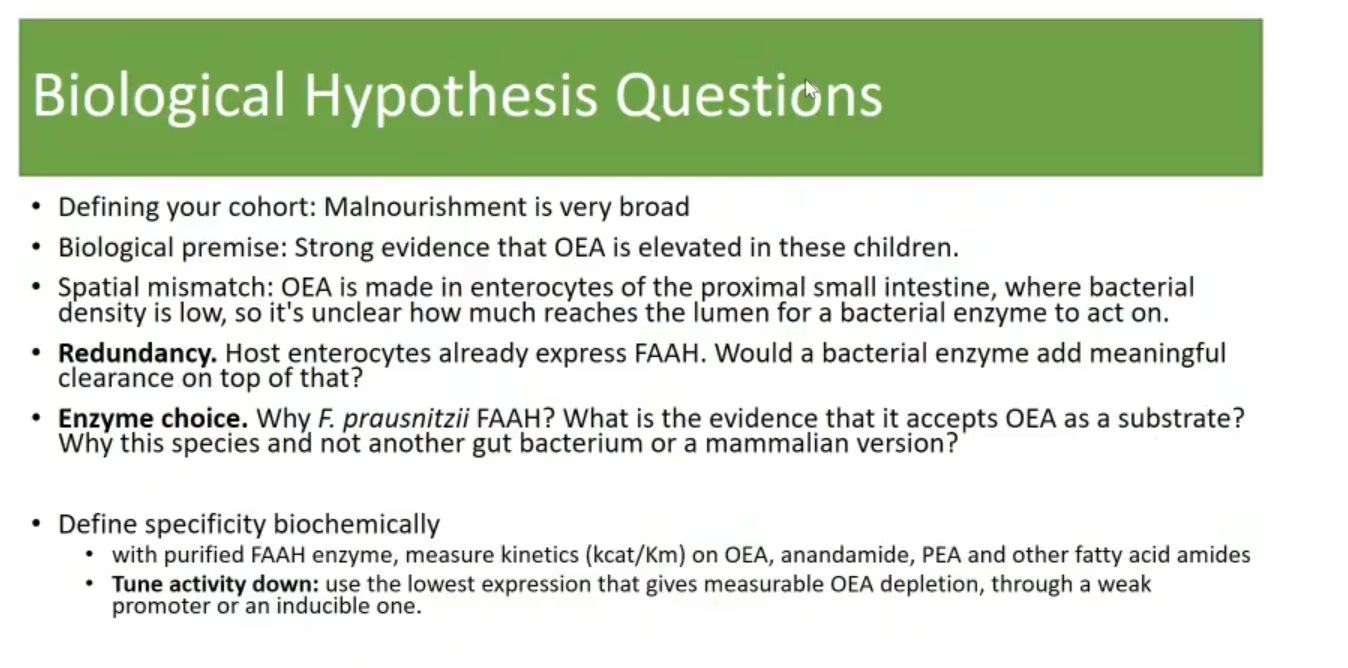
Spatial mismatch. OEA is synthesized in the enterocytes of the proximal small intestine, where bacterial density is low. An engineered strain has to reach and act in a region it does not naturally dominate, which makes colonization site, not expression level, the first thing that has to be demonstrated.
Host redundancy. Host enterocytes already express native FAAH. Our strain would be adding an activity the host performs for itself, which raises the question of what marginal effect a bacterial contribution can produce on top of an existing endogenous one.
Evidence we did not have. She prompted us to scrutinize our choice of F. prausnitzii FAAH specifically, asking for kinetic evidence that it acts efficiently on OEA rather than on anandamide, PEA or the other fatty acid amides a promiscuous hydrolase will readily accept.
Her observations about lipid handling and the physical constraints of the gut environment were a powerful example of how real-world biology introduces complexities that standard laboratory models can easily overlook.
Consequence
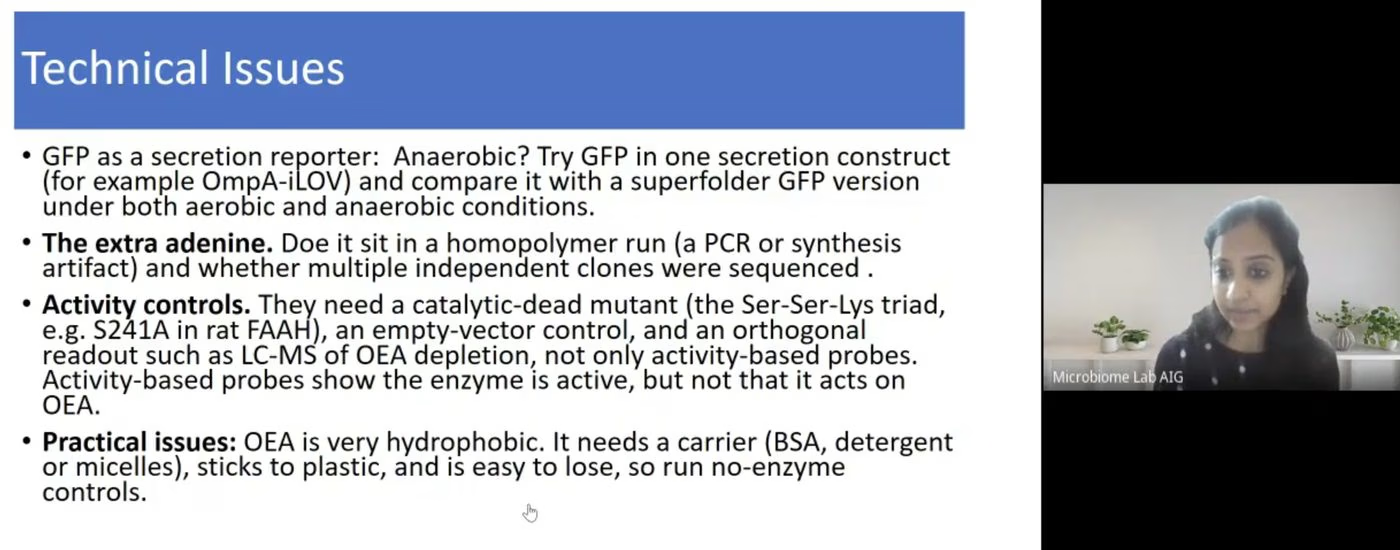
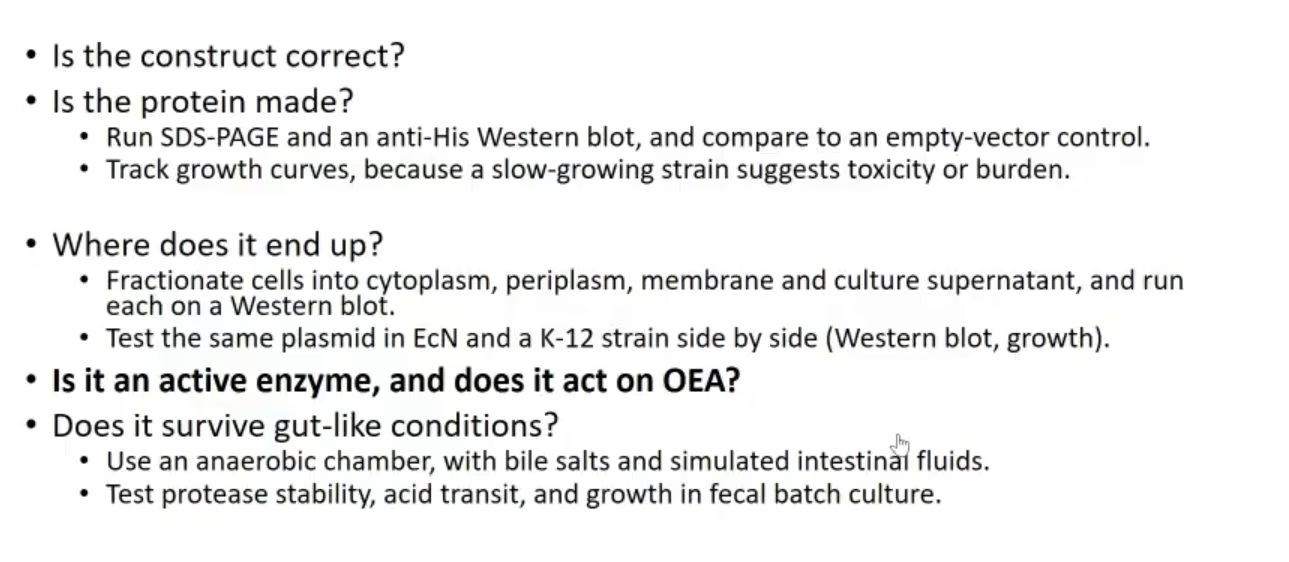
Our assay design changed. Generic commercial kits measure broad hydrolase activity rather than true substrate depletion, so our readout moved to LC-MS/MS validation of OEA depletion. OEA is a highly hydrophobic lipid that adheres to plasticware and requires carrier molecules such as BSA or detergents, so assays now include a carrier and a no-enzyme control to quantify what is lost to the labware rather than to the enzyme. A catalytic-dead mutant control is now treated as load-bearing rather than optional, because host background activity is real and expected. Her safety and ethics points, covering strain-specific considerations including colibactin and the ethics of pediatric intervention, are carried into our Safety and Security page.

The lineage she placed us in
Before criticizing the design she spent the first part of the session establishing where it comes from. We are reproducing those four slides because the history is not decoration: three of the four are directly load-bearing for our choices.

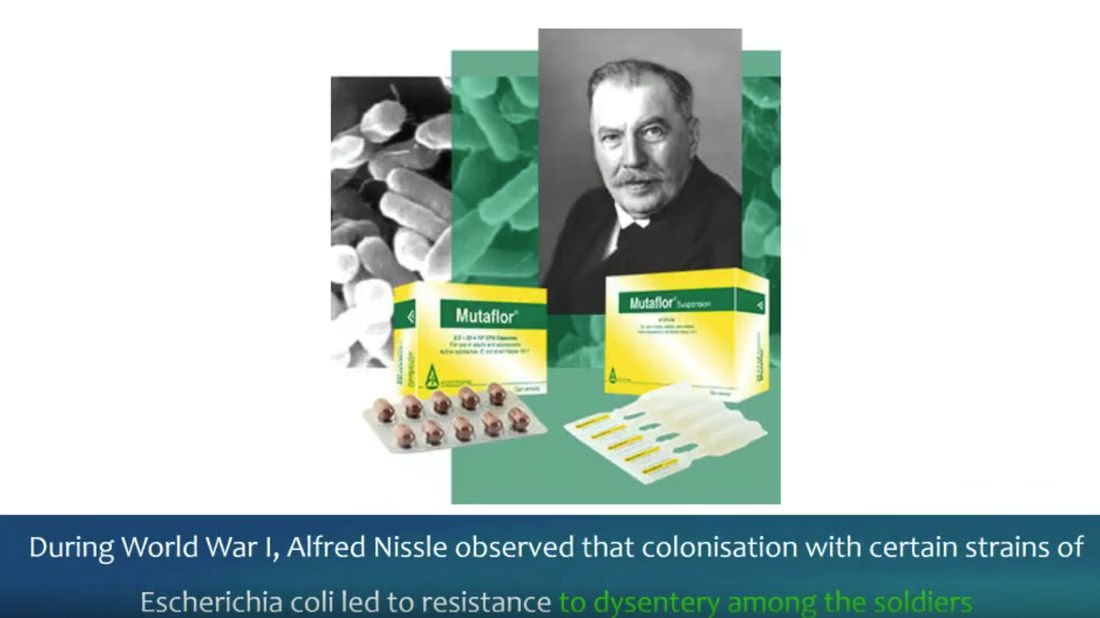


The questions themselves
We are reproducing her two critique slides in full rather than paraphrasing them. Paraphrase would soften them, and for any team building a lipid-degrading enzyme into a probiotic chassis these two images are the most useful thing on this page.
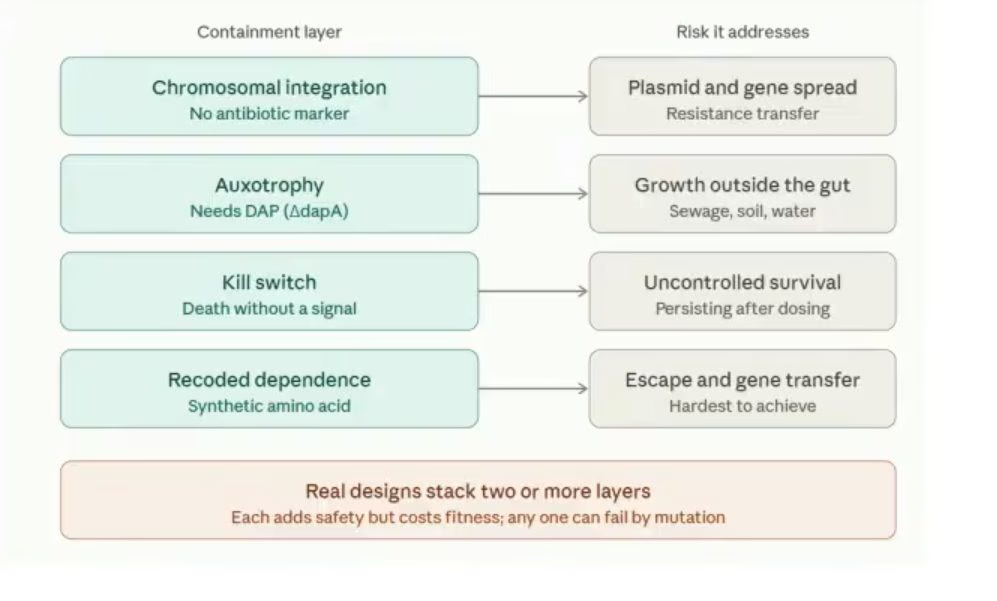
Translational realities
The final part of her session moved from our bench to the distance between any live biotherapeutic and a clinic. These three slides are the frame we now use on the Entrepreneurship page, and we are reproducing them here because they belong to this conversation.
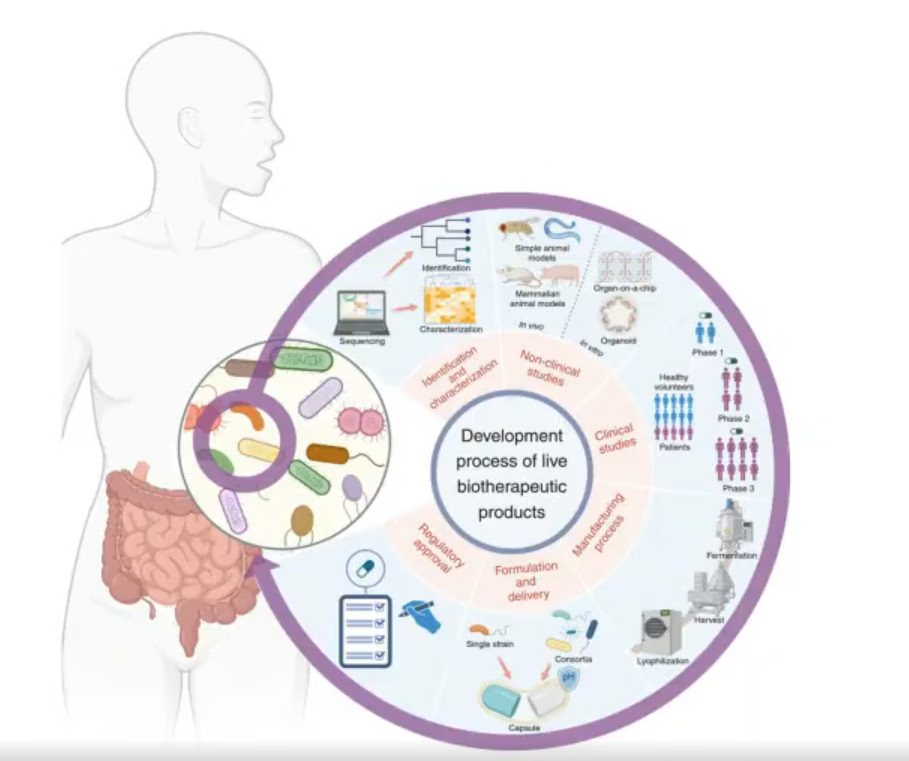
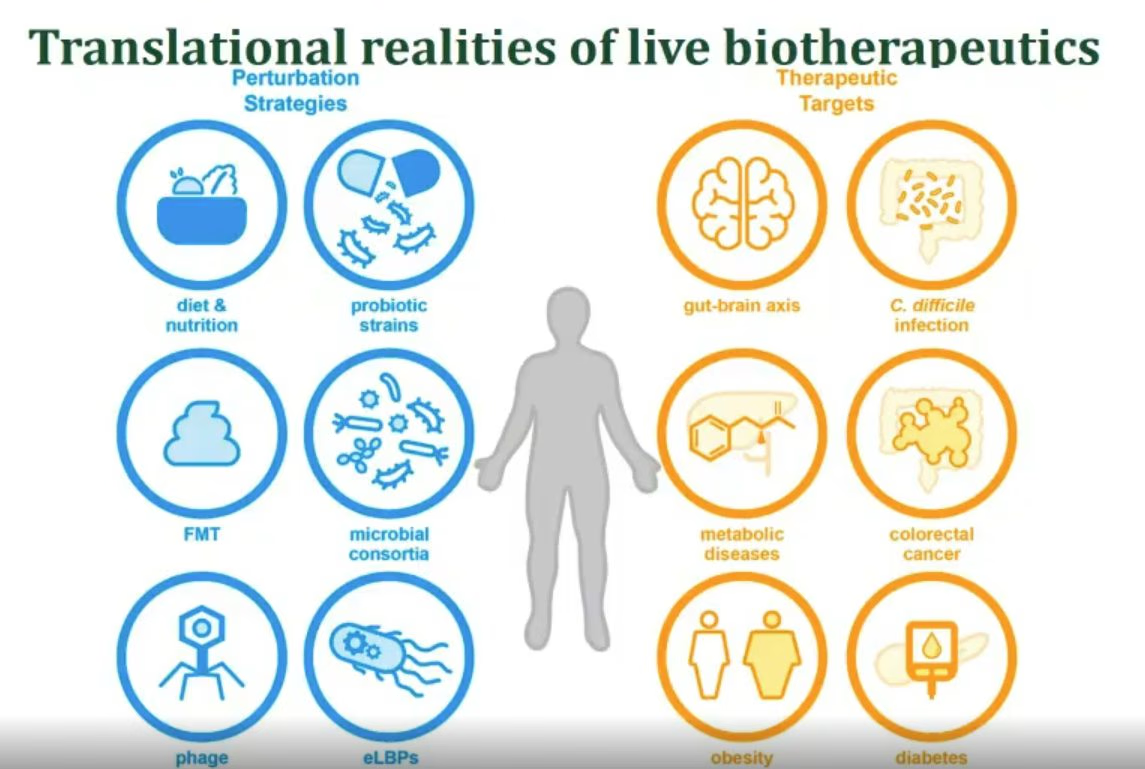
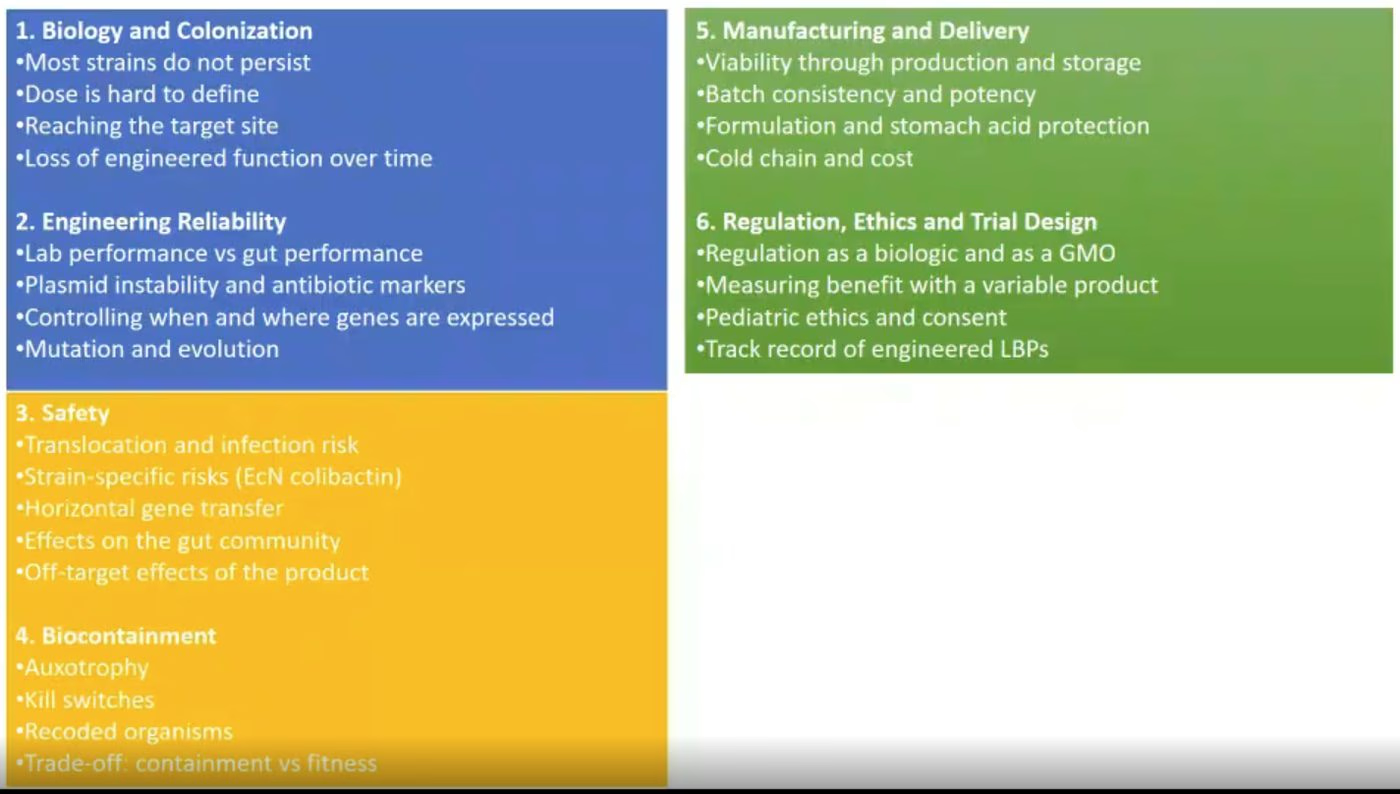
What we would pass on to another team working with gut enzymes
- Move beyond commercial assay kits. They report hydrolase activity, not depletion of your actual substrate.
- Account for hydrophobic substrates adhering to labware, and run a no-enzyme control to measure how much you lose to the plastic rather than to the enzyme.
- Always include catalytic mutant controls when studying lipid-degrading pathways, because host background activity is real.
- Check whether the host already performs your engineered activity, and where in the gut your substrate is actually made, before committing to a chassis.
- Tune expression down rather than up. The target is the lowest level that gives a measurable effect.