
Wet lab · Notebook
Notebook
A dated, honest record of our lab work, including troubleshooting and dead ends.
Weekly documentation of our wet lab work, June to October 2026.
Timeline Overview
Our notebook covers five months of experimental work, from finalizing the construct designs through building the probiotic strain itself. The arc of the season was: build a six-construct panel by IVA cloning, verify it by sequencing, and get the enzyme expressed. Because backbone and insert amplify separately, six constructs ran as twelve PCR reactions. Two problems dominated the middle of the season, a selection failure in June and a single unwanted nucleotide that took eight weeks to remove.
| Month | Theme |
|---|---|
| June 2026 | Design, first cloning round, selection troubleshooting |
| July 2026 | Verification, 6xHis tagging, first sequencing rounds |
| August 2026 | Tagged clones confirmed, deletion attempts |
| September 2026 | Deletion solved, expression confirmed, EcN transformation |
| October 2026 | Probiotic strain built and banked |
June 2026: Design and First Cloning Round
Key achievements
- Six construct designs finalized, twelve PCR reactions defined, and the standard IVA PCR protocol fixed
- Satellite colony problem diagnosed and selection switched to chloramphenicol
- Correct reaction #7 product isolated by gradient PCR and gel extraction
June 18
- Pulled FAAH, GFP, OmpA and OmpX sequences and codon optimized the inserts
- Mapped restriction sites in FAAH, GFP and pEM106.2 to choose screening enzymes
- Defined the six-construct panel, GFP, WT FAAH, ΔTm-FAAH with YebF, ΔTm-FAAH with IL10 removed, OmpA-ΔTm-FAAH and OmpX-ΔTm-FAAH, and designed matched backbone and insert primers for each, twelve reactions in total. The catalytic mutant controls were specified in the panel but never reached primer design
- Set the standard 25 µL reaction and the standard cycling program: 30 s at 95 °C, 18 cycles of 95 °C/10 s, 60 °C/30 s, 72 °C/4 min, 5 min final extension
- Agreed the standing fix for a failed reaction: re-run across a 55–65 °C annealing gradient
June 19–20
- Ran PCR on all twelve reactions using a shared mastermix
- Cast the gel and ran at 190 V for 30 min
- Imager unavailable at the end of the run, so held the gel at 10 V for 20 hours rather than switching off and letting the DNA diffuse
- June 20: no bands on first imaging. Re-ran a ladder with ethidium bromide instead of SYBR Safe and tried a second imaging machine. Saw a very faint ladder and a central dot only. Inconclusive
June 22–25
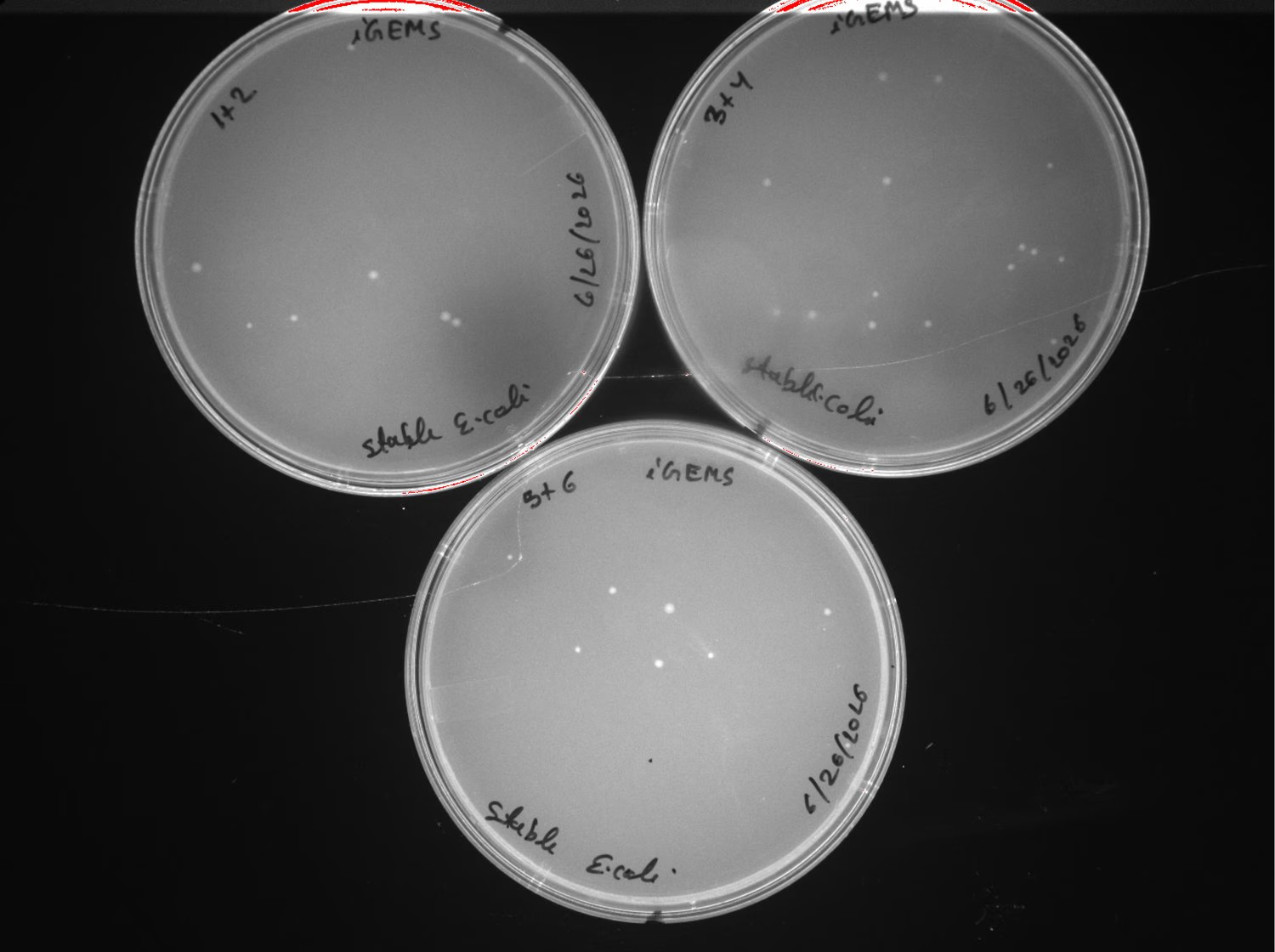
- June 22: re-ran PCR for reaction #7 with a different annealing temperature per tube. In parallel, heat shocked the products from reactions 1+2, 3+4 and 5+6 and plated them on 100 µg/mL ampicillin
- June 23: gel not run. The rig looked faulty and we chose not to risk the samples on it
- June 24: ran one PCR at 55 °C annealing, and a gel on the previous day’s products
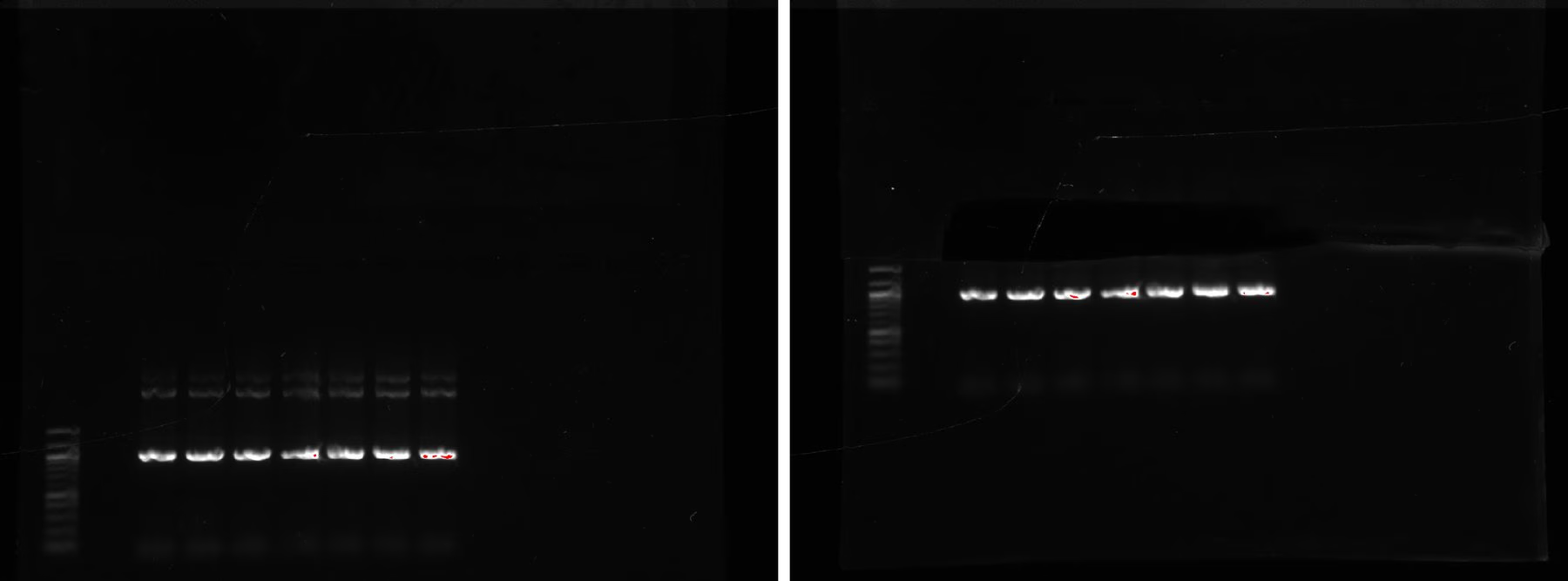
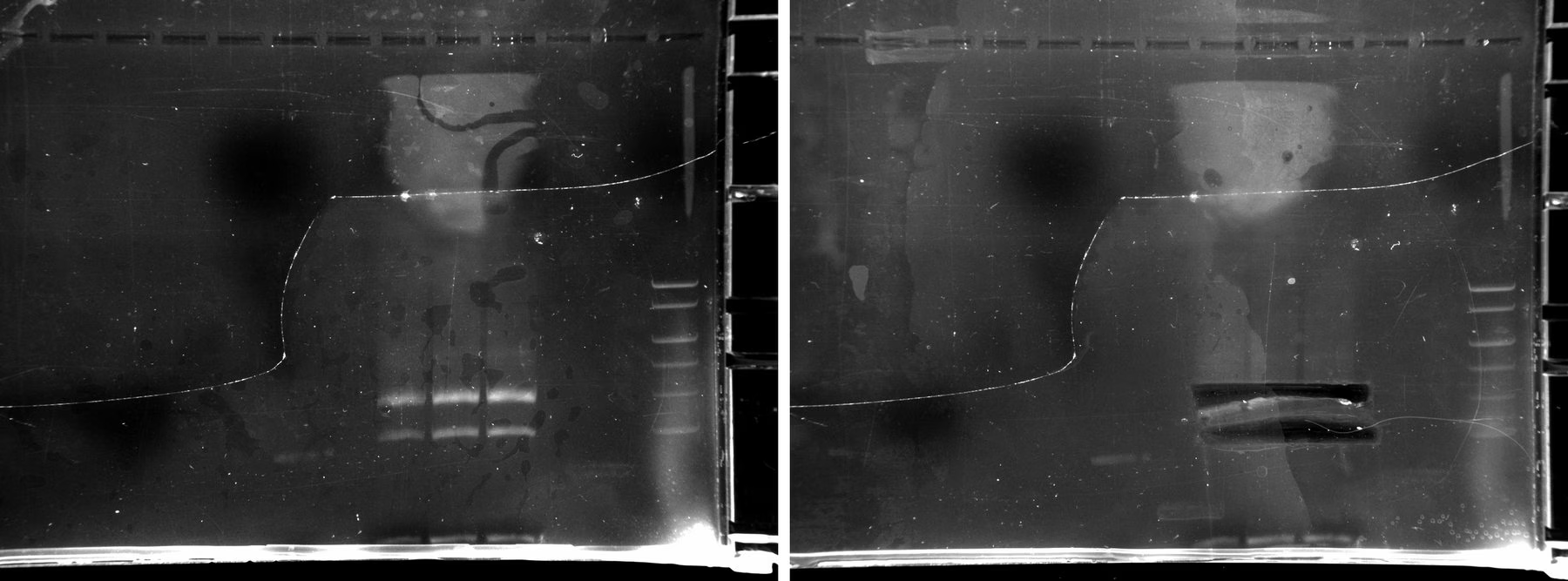
- June 25: ran #7 across a 55–67 °C gradient for 17 cycles on 0.5% agarose with a 100 bp marker, going above the 55–65 °C standing fix and one cycle below the standard 18. Product appeared across the whole gradient but with extra bands above it. Cutting the top bands cleaned up the pattern
June 27–30
- June 27: set up twelve overnight cultures in LB with ampicillin at 37 °C, inoculated from the June 22 transformation plates
- June 28: no growth. Returned the tubes to the incubator, assuming slow growth rather than failed transformation
- June 29: established that the colonies on the 100 µg/mL ampicillin plates were satellite colonies, not transformants. They grow on the plate but never establish in liquid culture. This explained both failed days. Re-ran the #7 gradient at 20 cycles with a 1 kb marker and got a product near the expected size
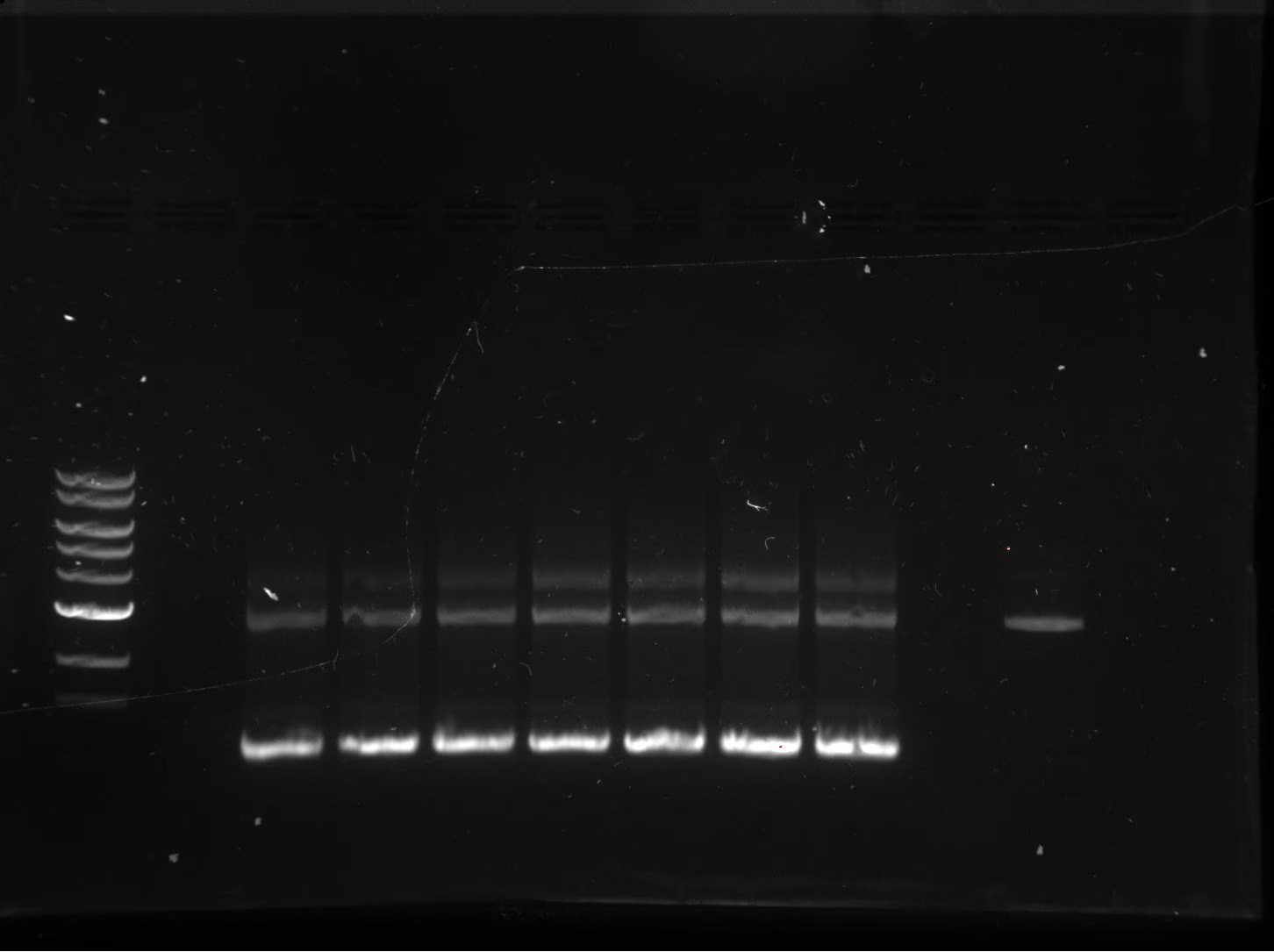
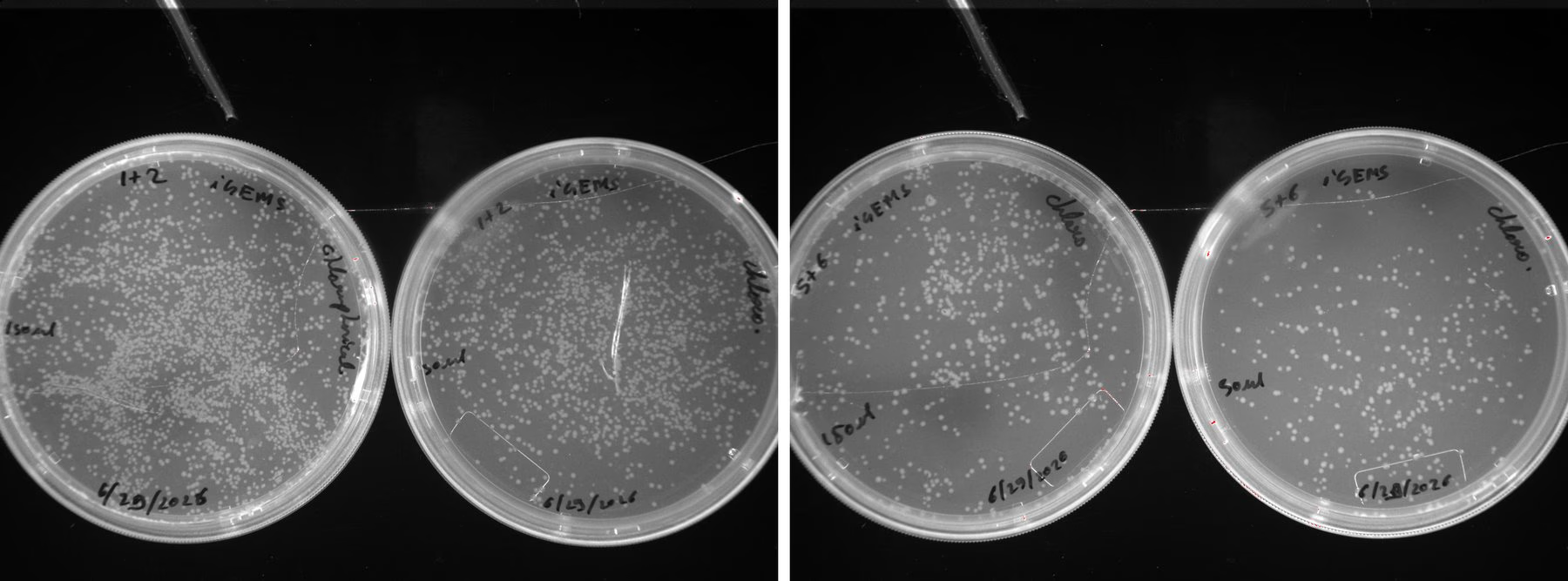
- June 30: poured LB agar plates with 25 µg/mL chloramphenicol and re-plated. Growth was normal. Ran #7 at 65 °C to separate the two upper bands, excised them, and gel extracted: upper band 8 ng/µL, lower band 13 ng/µL, roughly 30 µL each. Set up fresh overnight cultures in LB with chloramphenicol. Checked uninduced plates under UV and observed no visible GFP fluorescence on plate 1+2
The selection failure ran eight days, from plating on 22 June to re-plating on 30 June.
July 2026: Verification and Tagging
Key achievements
- First sequencing round completed, ΔTm-FAAH insert confirmed present
- Extra ‘A’ nucleotide at the junction identified
- 6xHis tagging strategy designed and first tagging PCR successful
July 3–11
- July 3: miniprep and restriction digest. Two procedural errors: used the spin column instead of an Eppendorf tube, and did not empty the column before centrifuging. DNA recovered but quality uncertain
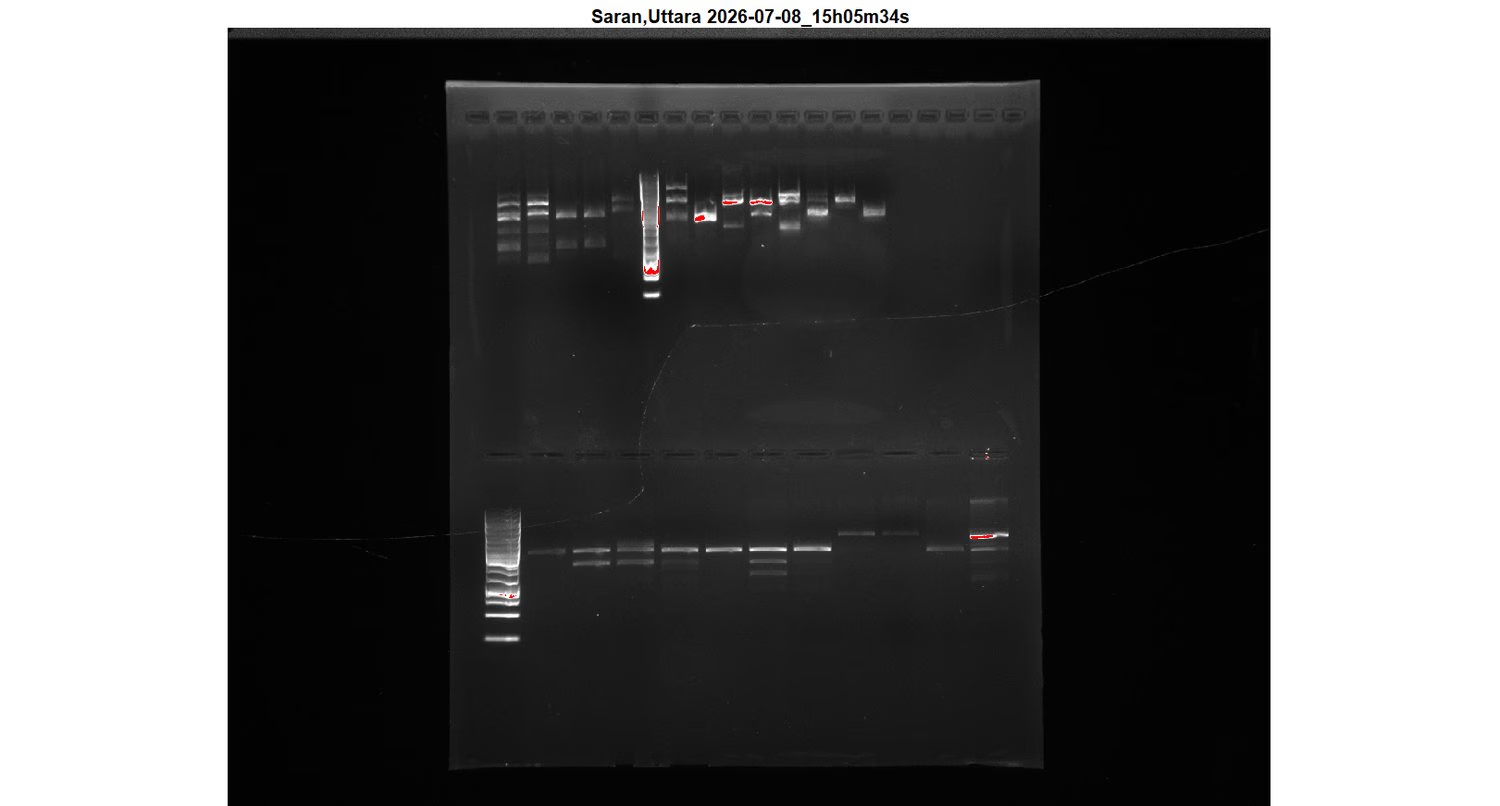
- July 8: ran a gel on the restriction digests of the purified plasmids
- July 10: set up a 24-reaction restriction digest. Ran out of Enzyme 2 and Mastermix 2 partway through, so only 20 reactions were incubated. Volume calculation error
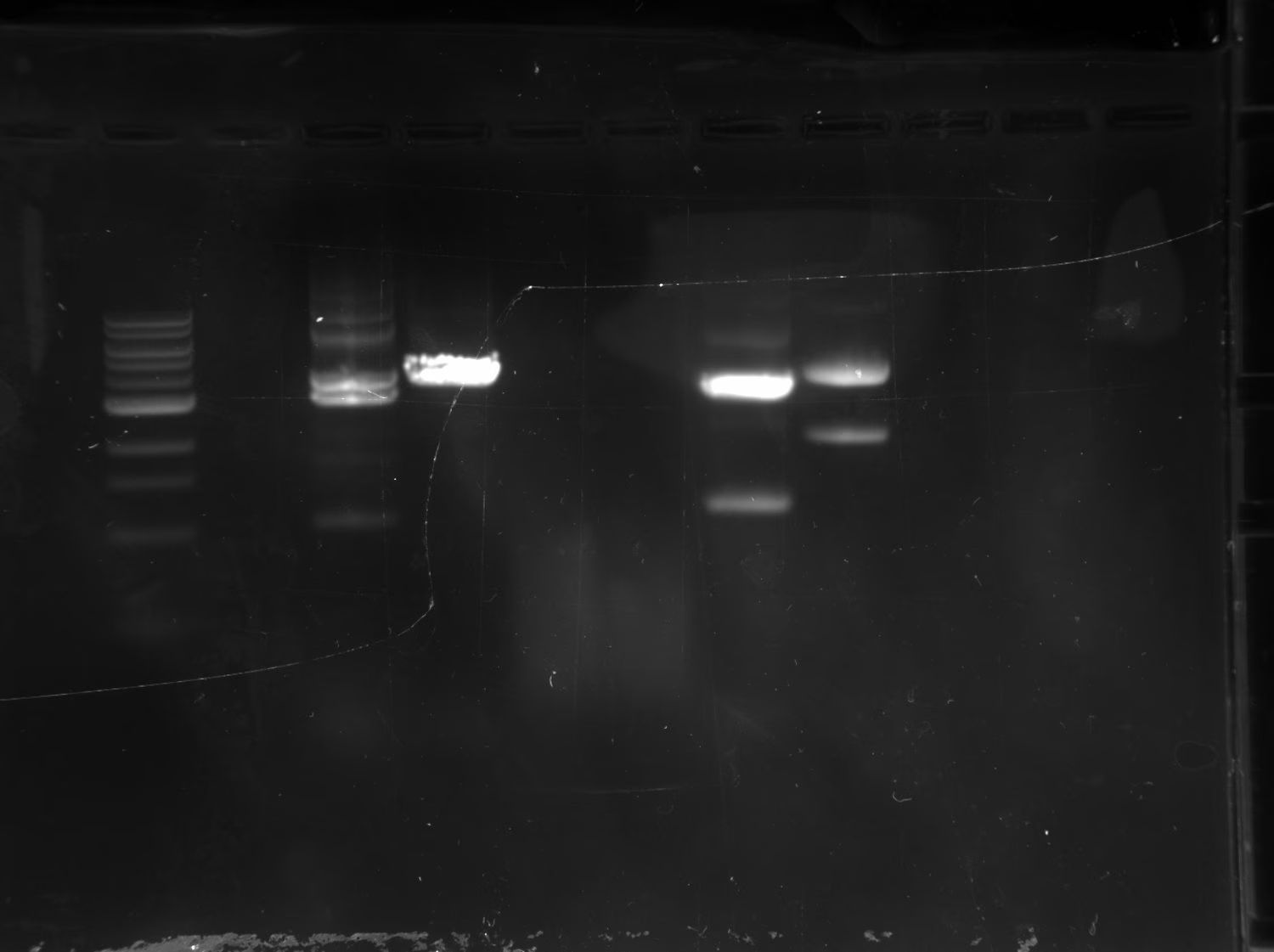
- July 11: ran and imaged the digest gel at 160 V for 30 min. Bands visible but several unseparated and some very faint. Decided to use a different rig in future
July 17–23
- July 17: submitted the first Sanger round, clones K1 to K24, the pEM106 control, and the DF and DC samples
- July 18: designed primers to add a 6xHis tag at the YebF N-terminus for later detection and purification
- July 20: first Sanger sequencing round returned. GFP clones #1–5, WT FAAH clones #6–10 and clones #11–15 all returned negative or unrecorded reads. ΔTm-FAAH lower-band clones #16, 17, 18, 20 were parent plasmid. Upper-band clones #19, 21, 22, 23 carried the insert in frame, but with one extra ‘A’ nucleotide at the junction that has to be removed
- July 23: designed a C-terminal FLAG tag primer pair and two whole-gene sequencing primers, and assembled the full primer order
July 29–31
- July 29: submitted the second Sanger round, clones K1 to K15 and K24, re-sequenced with a different primer
- July 30: ran PCR to add 6xHis to clones #19 and #21 and to remove the extra ‘A’ in the same round. The 6xHis insertion worked for both. The ‘A’ removal gave no product at all. Took #19-6xHis, #21-6xHis and PEM-6xHis forward into E. coli Stable cells
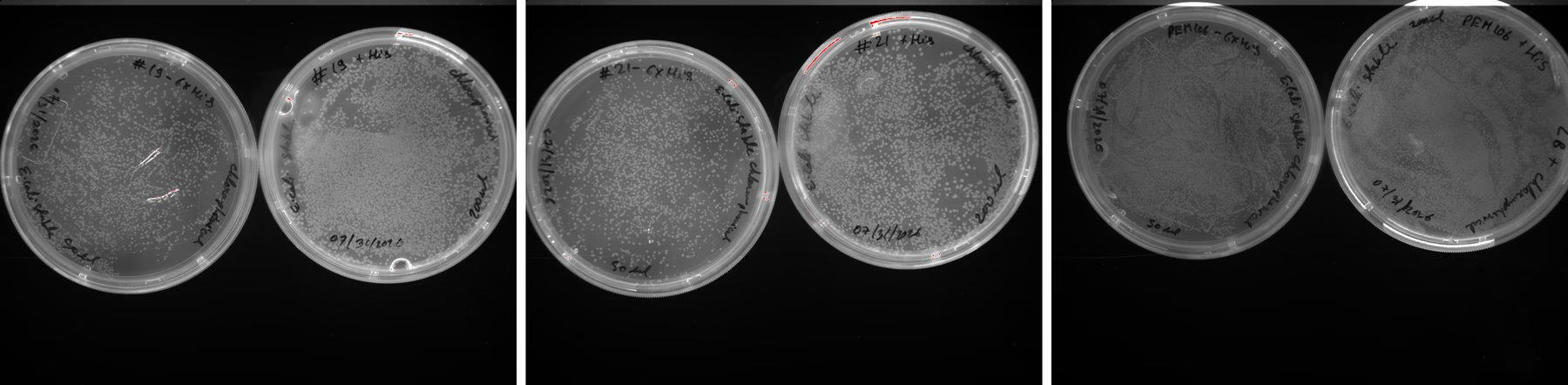
- July 31: second sequencing round returned, giving our first clean clones. #2 GFP, #7 and #8 WT FAAH, #11 and #12 ΔTm-FAAH, #13 and #14 GFP with clean reads at both termini. Took #7, #11 and #13 forward. Colonies also came up on all three transformation plates from July 30
Both rounds use the same clone numbering. The second round re-sequenced clones from the first with a different primer, which is why clones in the same number ranges read negative on July 20 and confirmed on July 31.
August 2026: Tagged Clones and Failed Deletions
Key achievements
- First clean clones verified: GFP, WT FAAH and ΔTm-FAAH
- 6xHis tag confirmed by sequencing in all six tested colonies
- A tube swap caught by sequencing, prompting a formal clone tracker
August 4–12
- August 4: submitted and returned the same day, sequenced the 6xHis-tagged clones, nine samples: 19H1 to 19H3, 21H1 to 21H3 and PH1 to PH3. All three colonies from each of the #19 and #21 backgrounds carried the tag correctly. Control plasmids P_1 and P_3 correct, P_2 negative. The extra ‘A’ was still present in all of them
- August 12: ordered 6xHis forward primers for WT FAAH, GFP, ΔTm-FAAH, OmpA and OmpX, plus the 19_delA pair. The existing 6xHis_YebF_Rv primer serves as the shared reverse for all of them
August 19–25
- August 19: ran PCR to add 6xHis to #7, #11 and #13 and to remove the extra ‘A’ from #19, at 60 °C and 62 °C. Clean products near 3 kb for the tagging reactions at both temperatures
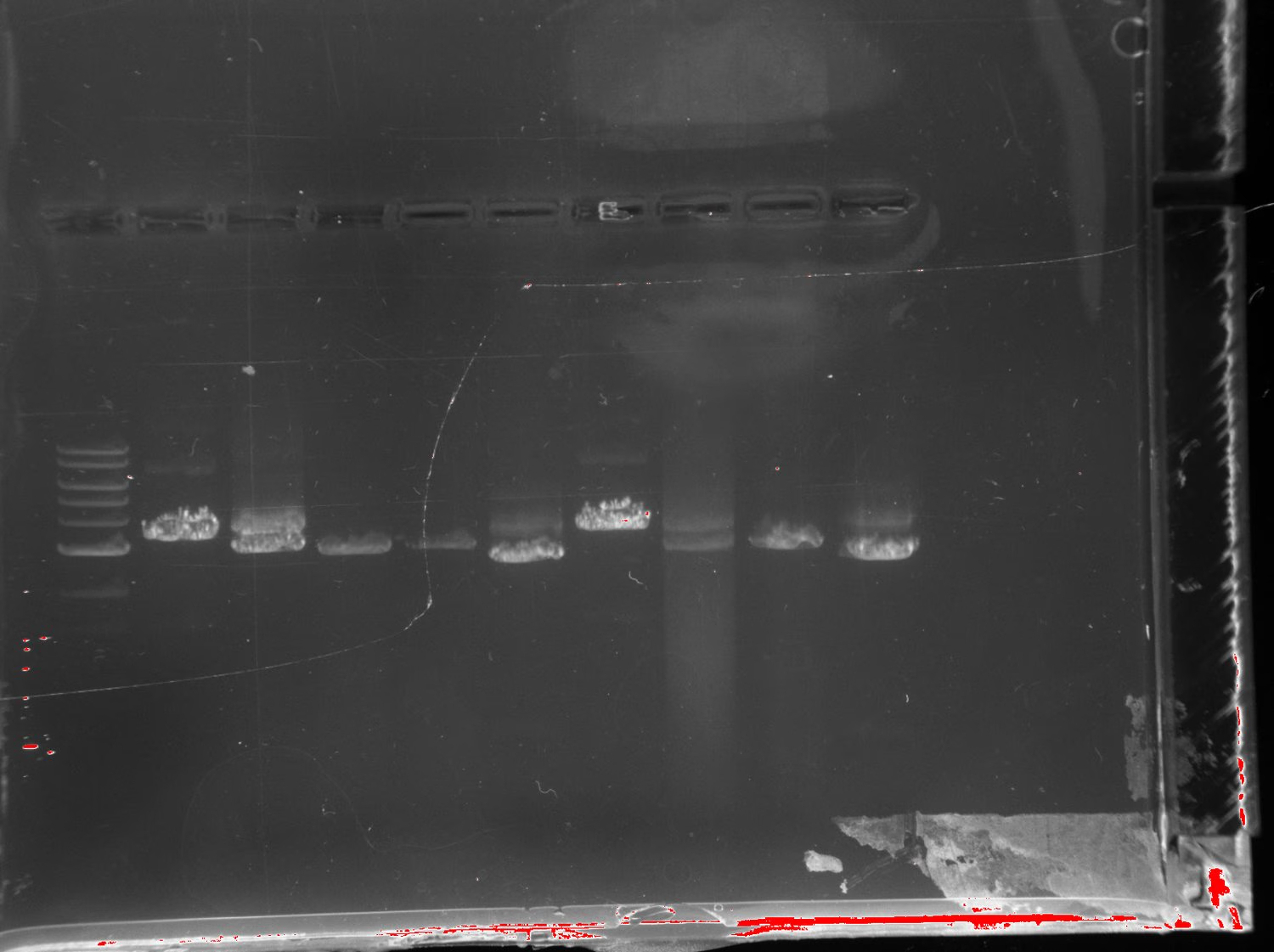
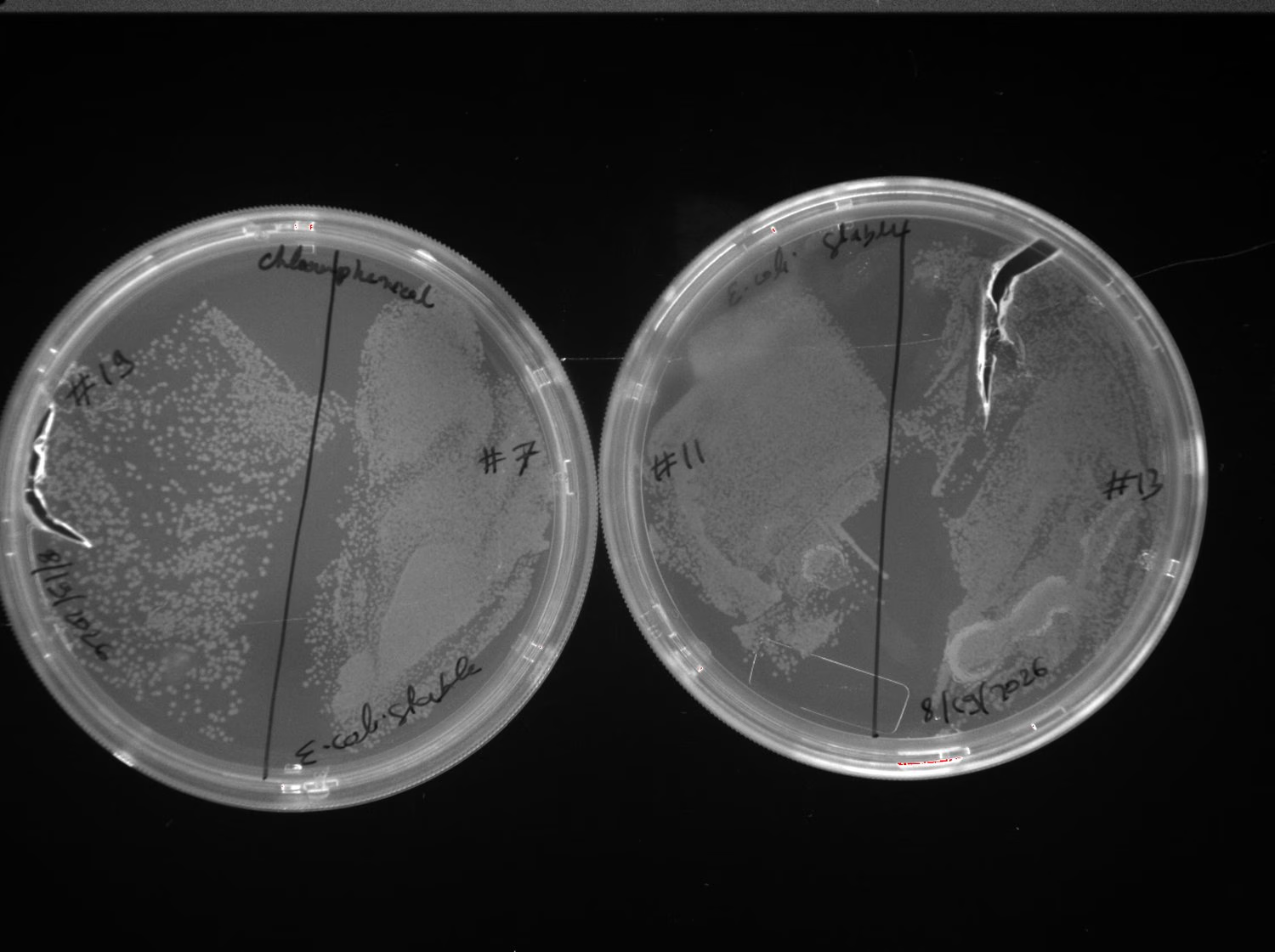
- August 21: plated the transformations, picked 3 colonies from each, minipreped them
- August 24: submitted twelve samples, 7H1 to 7H3, 11H1 to 11H3, 13H1 to 13H3 and 19A1 to 19A3
- August 25: returned. The tags had gone in correctly, but two samples were in the wrong tubes. #11_H2 was actually 6xHis-GFP and #13_H1 was actually 6xHis-ΔTm-FAAH, a straight swap. Both constructs were real and correct. #7_H1 gave the best read of its set, #7_H2 carried a spurious extra ‘T’. The #19_A1 to #19_A3 clones still had the extra ‘A’. We started a formal clone tracker the same week
August 26–31
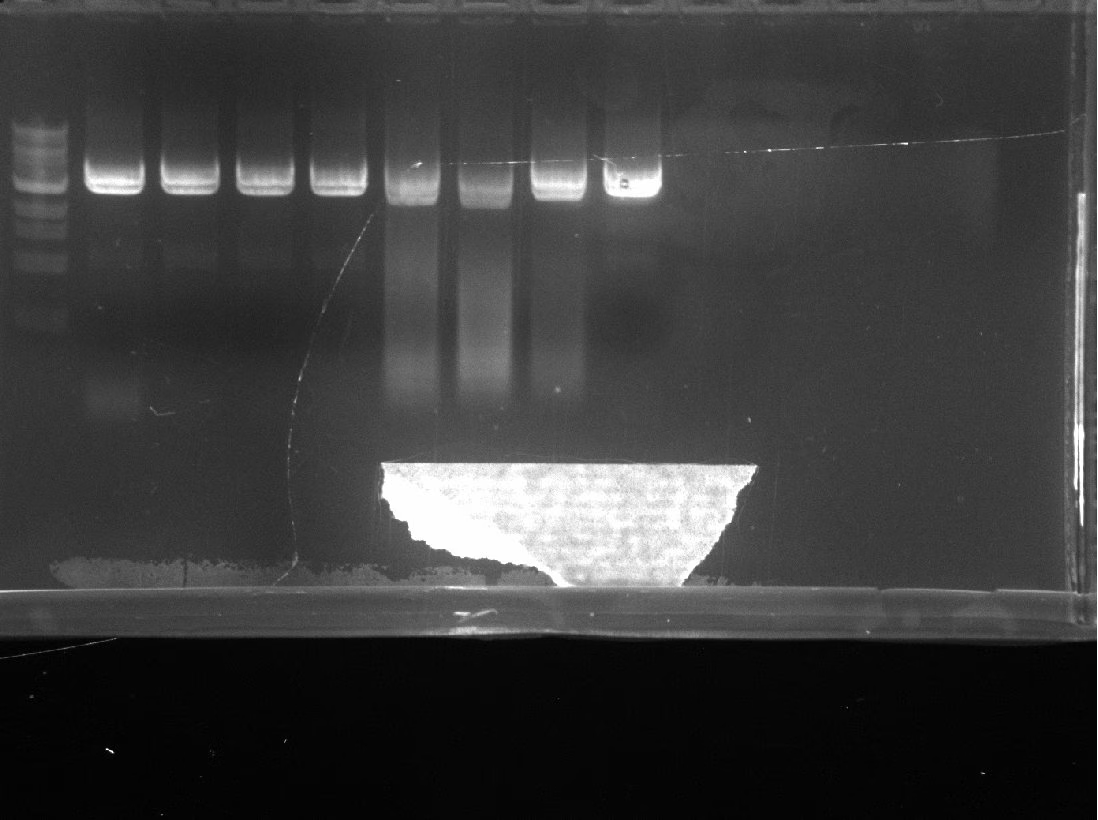
- August 26: re-ran the ‘A’ removal PCR across a 61–68 °C gradient
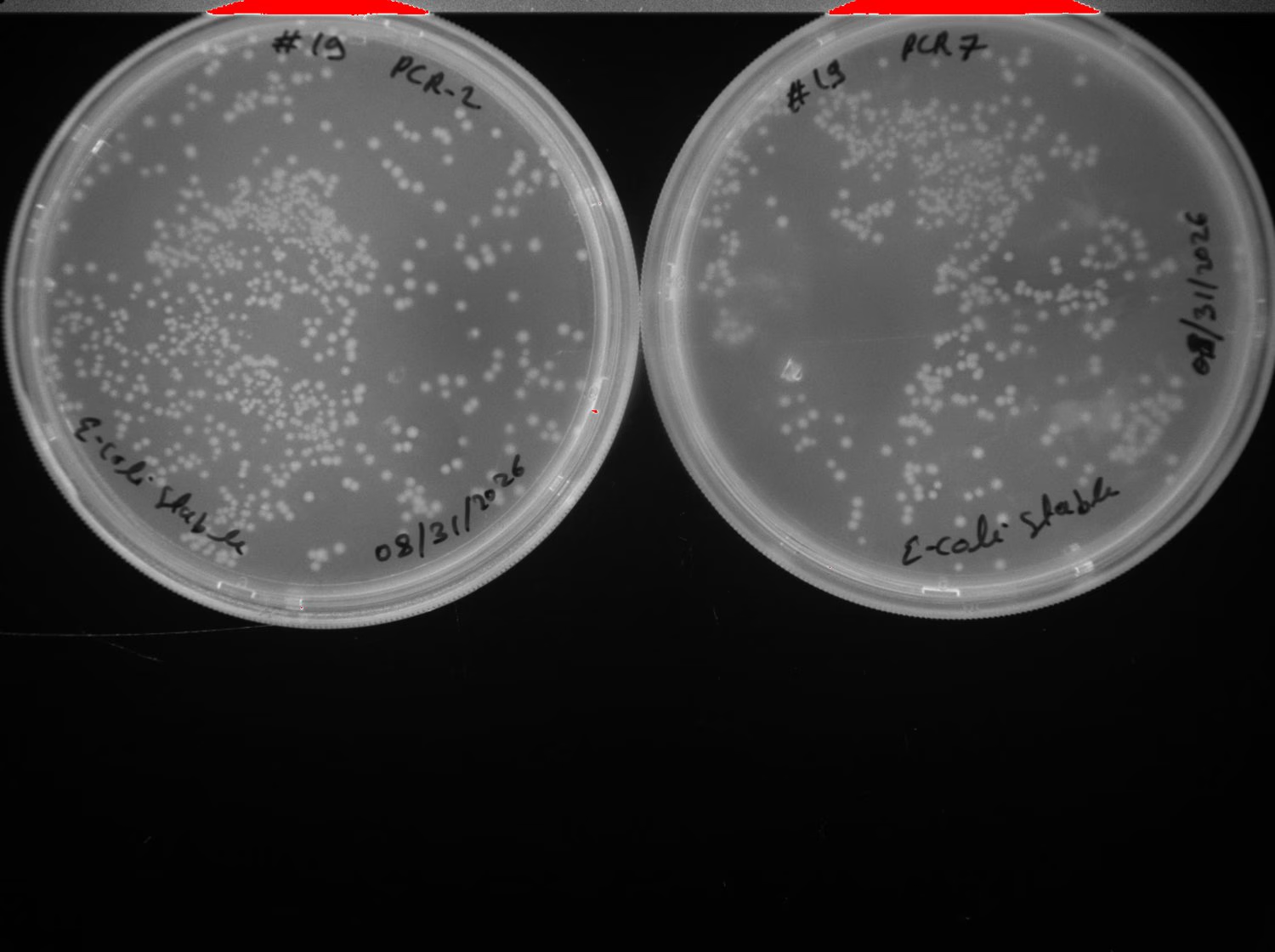
- August 31: plated the transformations, picked 3 colonies from each of the two plates, six in total, minipreped and prepared them for sequencing
September 2026: Deletion Solved and Expression Confirmed
Key achievements
- Extra ‘A’ removed and the construct sequence verified after eight weeks of attempts, from the first sequencing return on 20 July to the sequencing that confirmed the base gone on 15 September
- Expression of all three test constructs confirmed by SDS-PAGE
- 6xHis-YebF-ΔTm-FAAH transformed into E. coli Nissle 1917, the target chassis
September 2–11
- September 2: submitted the six clones picked on August 31, 1911, 1912, 1913, 1921, 1922 and 1923
- September 3: returned. All failed. #19_1_1 read the target base as an ambiguous ‘N’, #19_1_3 and #19_2_2 returned unchanged parental sequence, and the remaining three failed to yield usable reads
- We concluded that blunt-end ligation inside E. coli was the bottleneck and decided to redesign for sticky ends
- September 8: redesigned the deletion primers so the product would carry complementary overhangs, checking the Tm of the homologous region
- September 9: ran the sticky-end PCR across 8 conditions. Bands came out between 1.0 and 2.0 kb against an expected 3 kb, so the reaction was amplifying the wrong thing
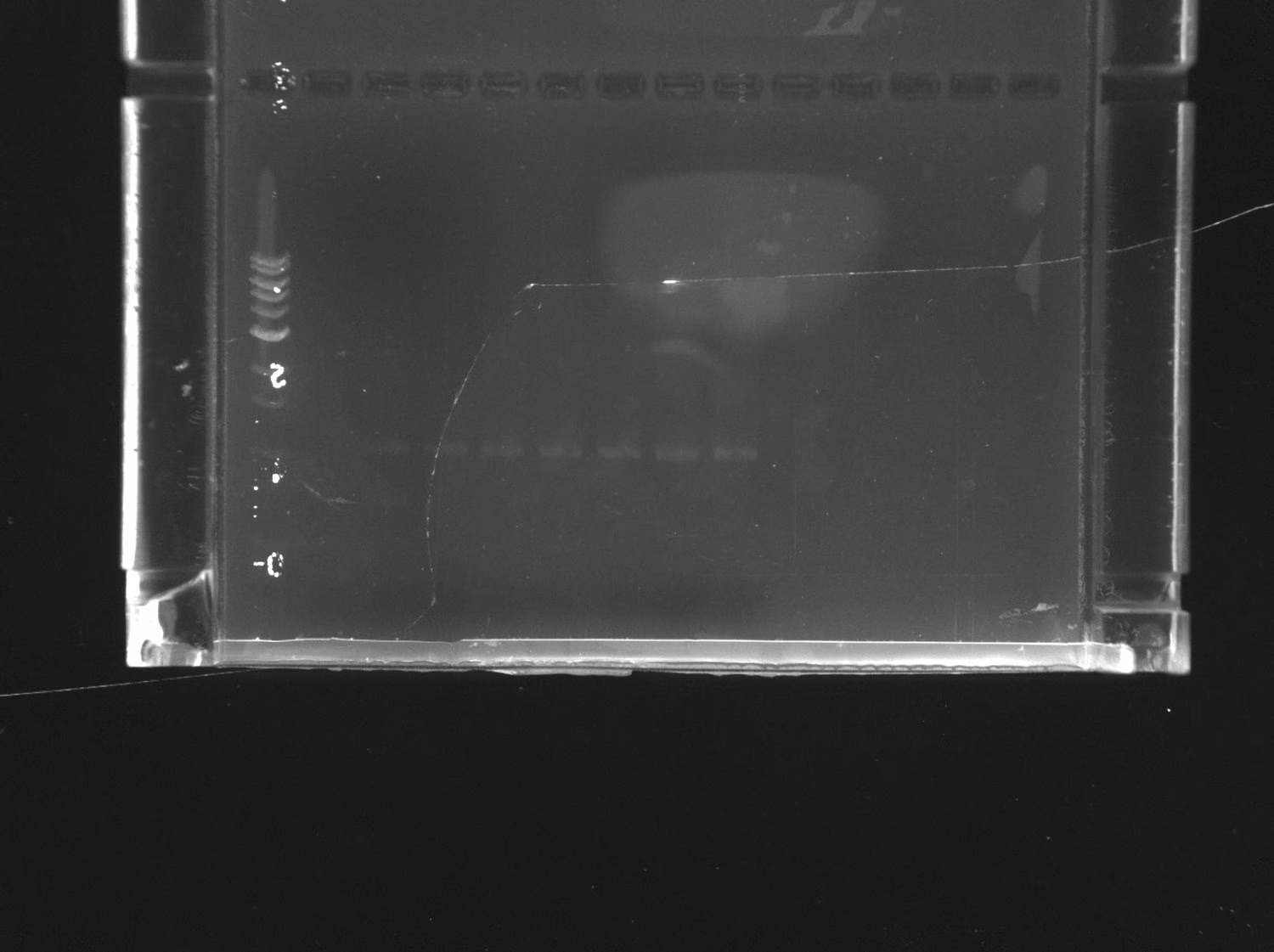
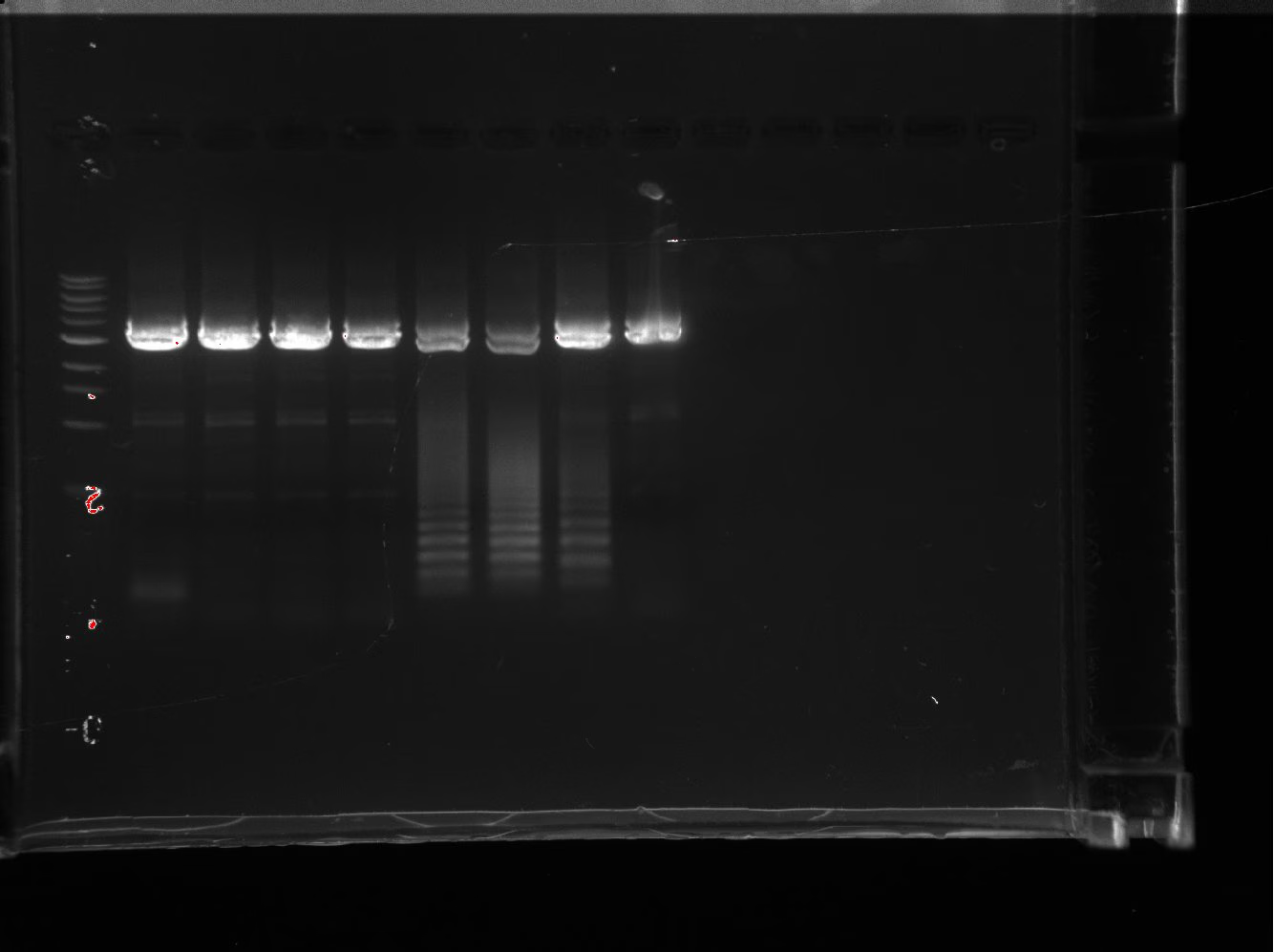
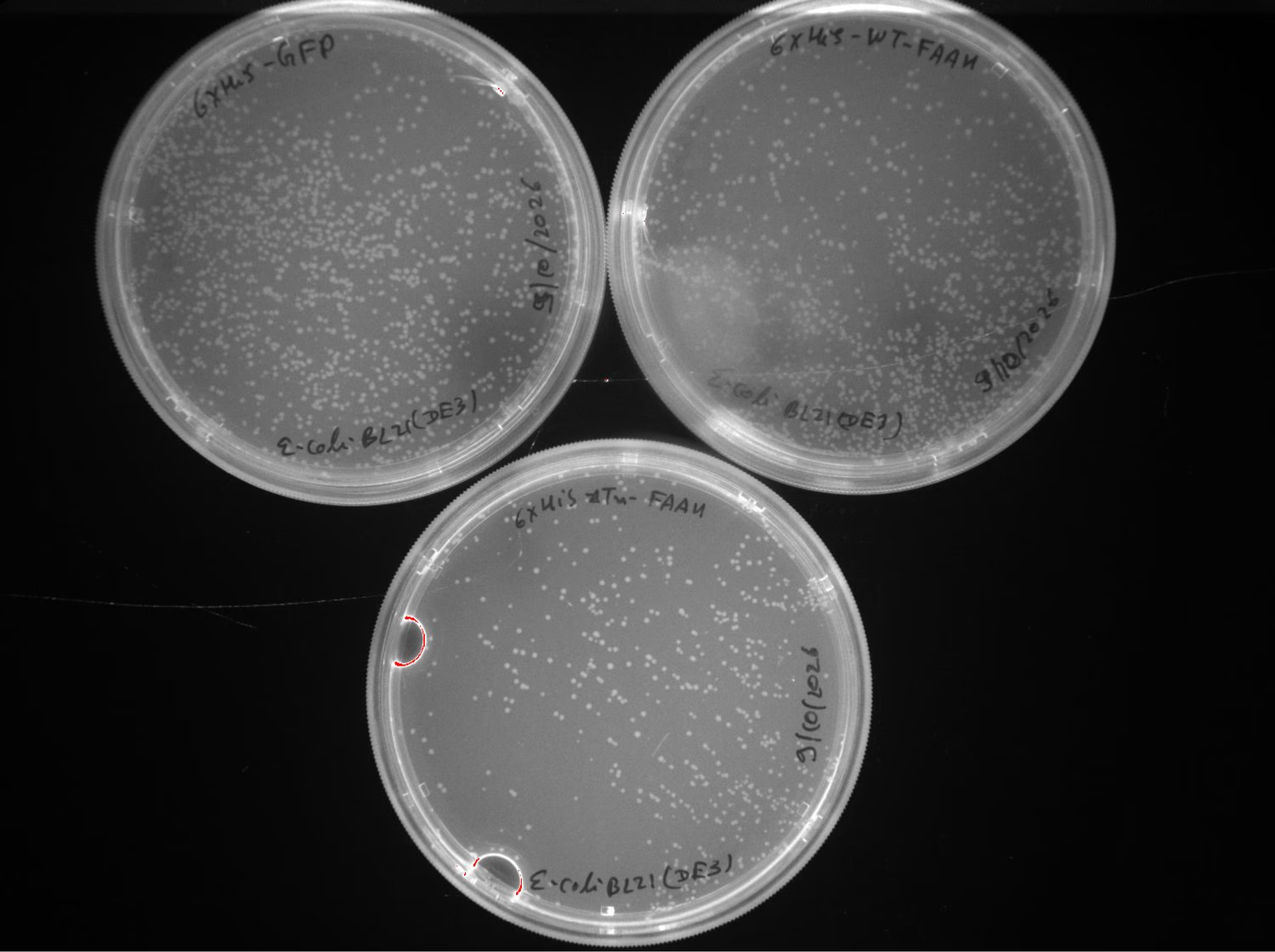
- September 10: treated the 8/26 PCR product with fresh DpnI overnight at 37 °C to make certain no parental plasmid survived, then checked on gel and plated the 61 °C reaction. Separately, transformed GFP, WT-FAAH and ΔTm-FAAH into E. coli BL21(DE3) for expression testing
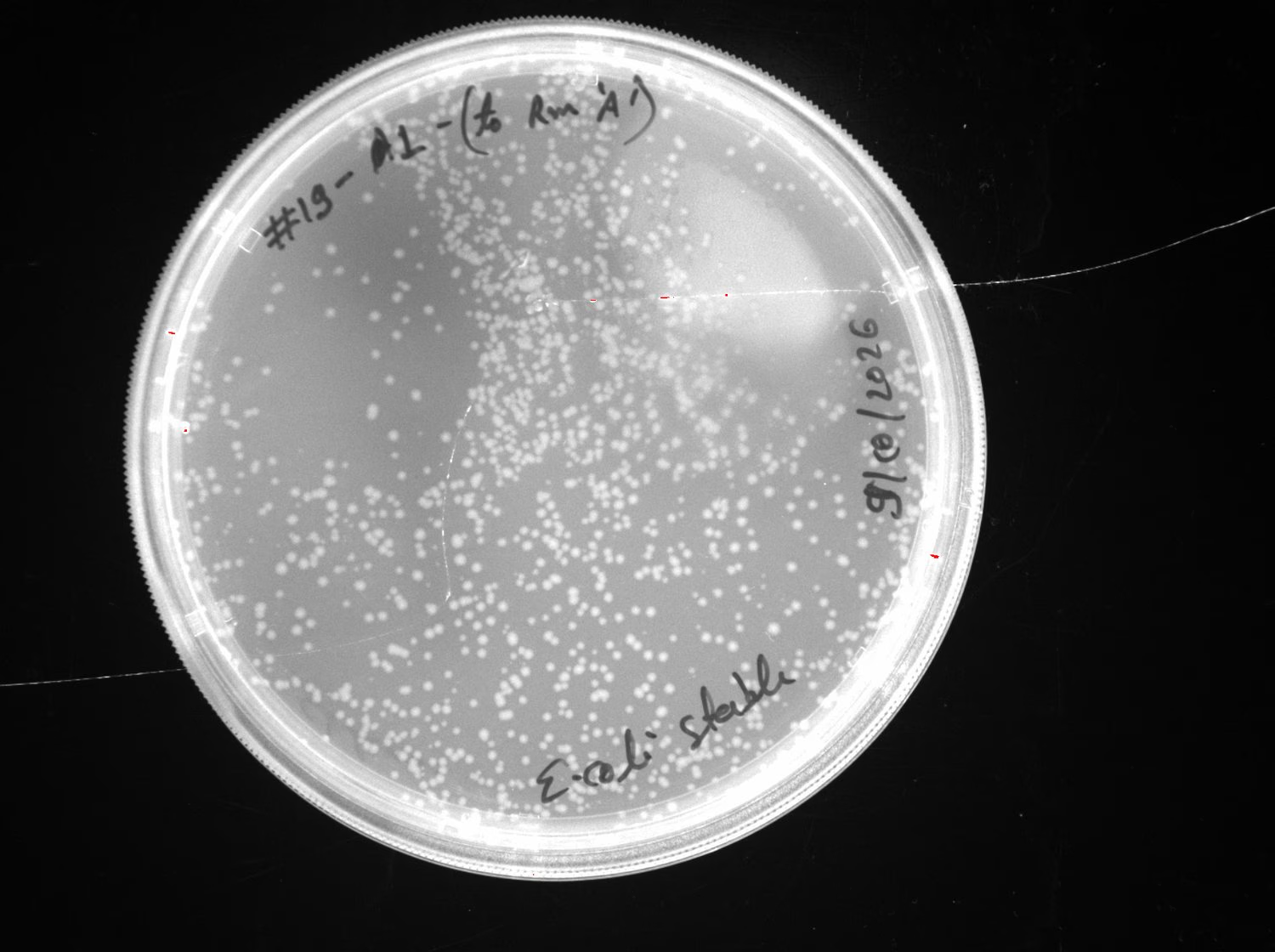
- September 11: colonies on the plate. Picked five for miniprep and prepared the in vitro phosphorylated and ligated deletion batch (#191 to #195) for sequencing
September 13–15
- September 13: inoculated one colony of each expression construct into 5 mL LB with chloramphenicol
- September 14: diluted 1 mL of each overnight culture into 100 mL fresh medium, induced with 1 µg/mL doxycycline, incubated 3 hours at 37 °C, harvested and stored the pellets at −20 °C
- September 14: submitted the five deletion clones for sequencing, #191, #192, #193, #194 and #195
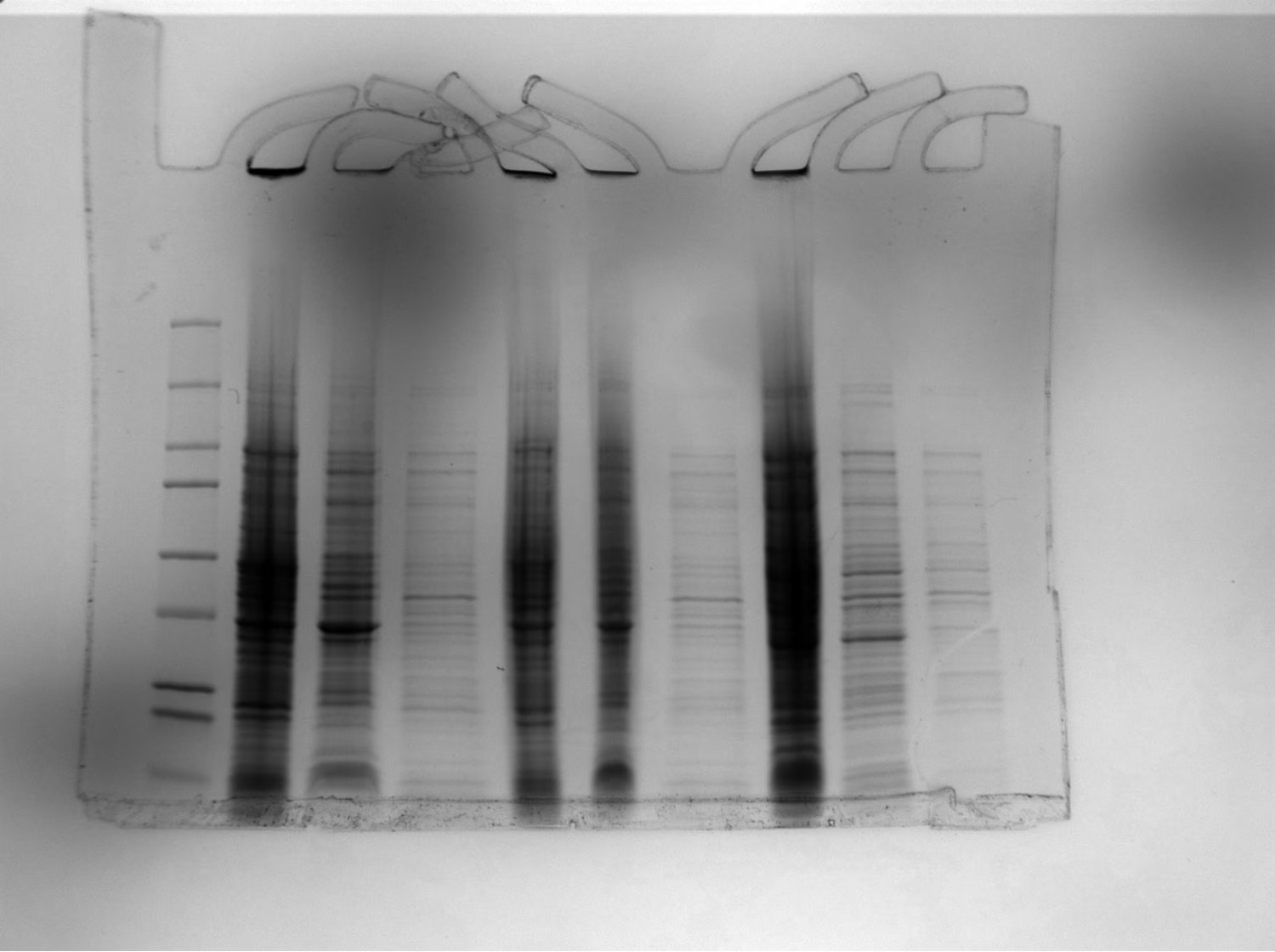
- September 15: five reads returned. Sequencing confirmed removal of the unwanted adenine and an intact reading frame in clone #193, while #194 returned unchanged parental plasmid. Also on September 15, ran SDS-PAGE on uninduced, induced pellet and induced supernatant fractions for each expression construct. Induced lanes showed bands absent from the uninduced lanes for all three. Expected sizes 27.7 kDa for 6xHis-GFP, 44.2 kDa for 6xHis-WT-FAAH and 40.7 kDa for 6xHis-ΔTm-FAAH
September 21–30
- September 21: ran the ‘A’ removal PCR product on a preparative gel and excised the 3 kb band
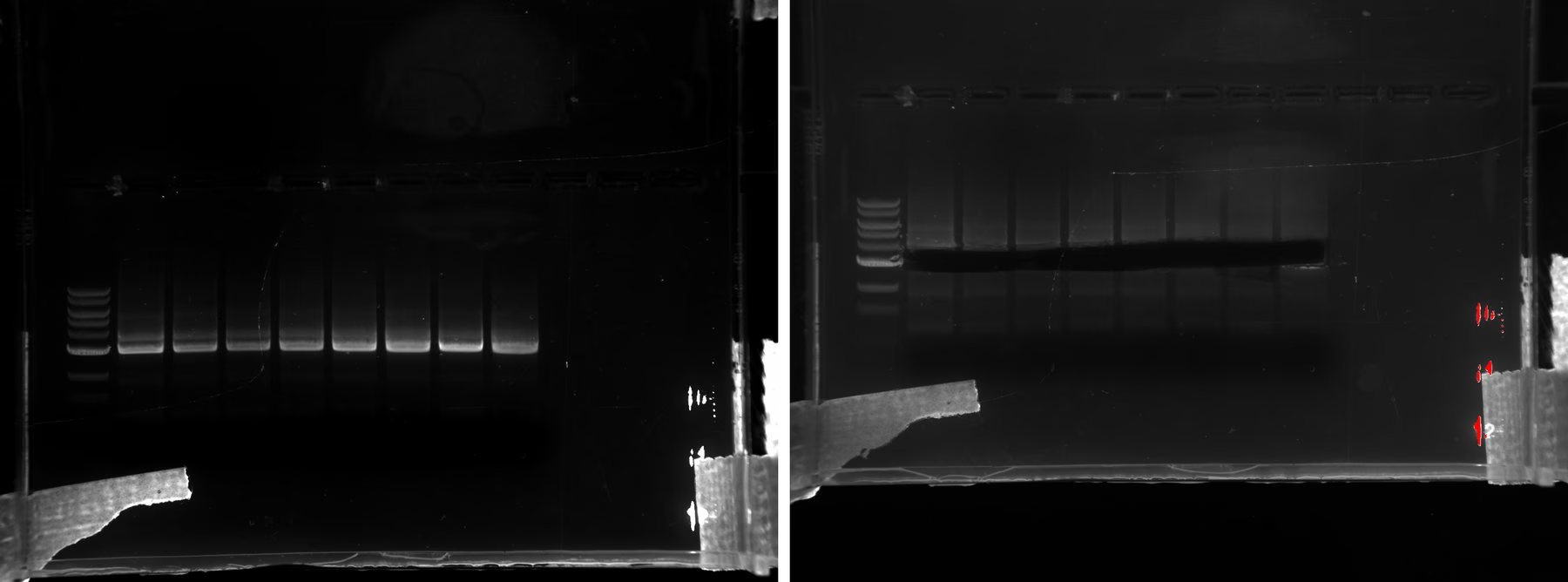
- September 22–23: completed the preparative in vitro closure workflow, gel extracted the product, phosphorylated the 5’ ends with T4 PNK, ligated with T4 DNA ligase, and transformed into E. coli Stable cells ahead of moving the verified construct into the target chassis
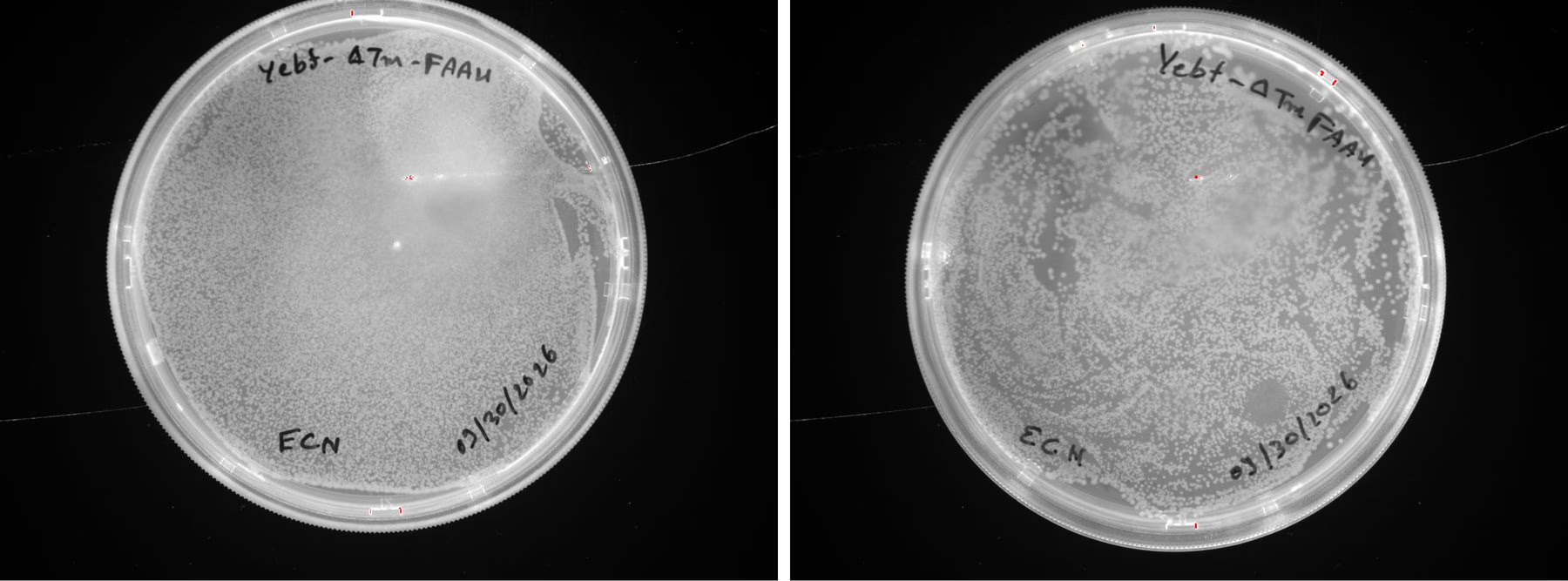
- September 30: transformed 6xHis-YebF-ΔTm-FAAH into E. coli Nissle 1917. Designed the primer sets to replace YebF with OmpA and with OmpX in the verified construct
October 2026: Building the Probiotic
Key achievements
- All constructs complete except the OmpA and OmpX display versions and the catalytic mutants
- 6xHis-YebF-ΔTm-FAAH transformed into EcN as a full team run, producing our first candidate probiotic strain
- Strain banked as glycerol stocks at −80 °C
October 3–6
- October 3: confirmed that every clone is ready except the OmpA and OmpX tagged versions, and that E. coli Nissle 1917 is prepared and ready for transformation
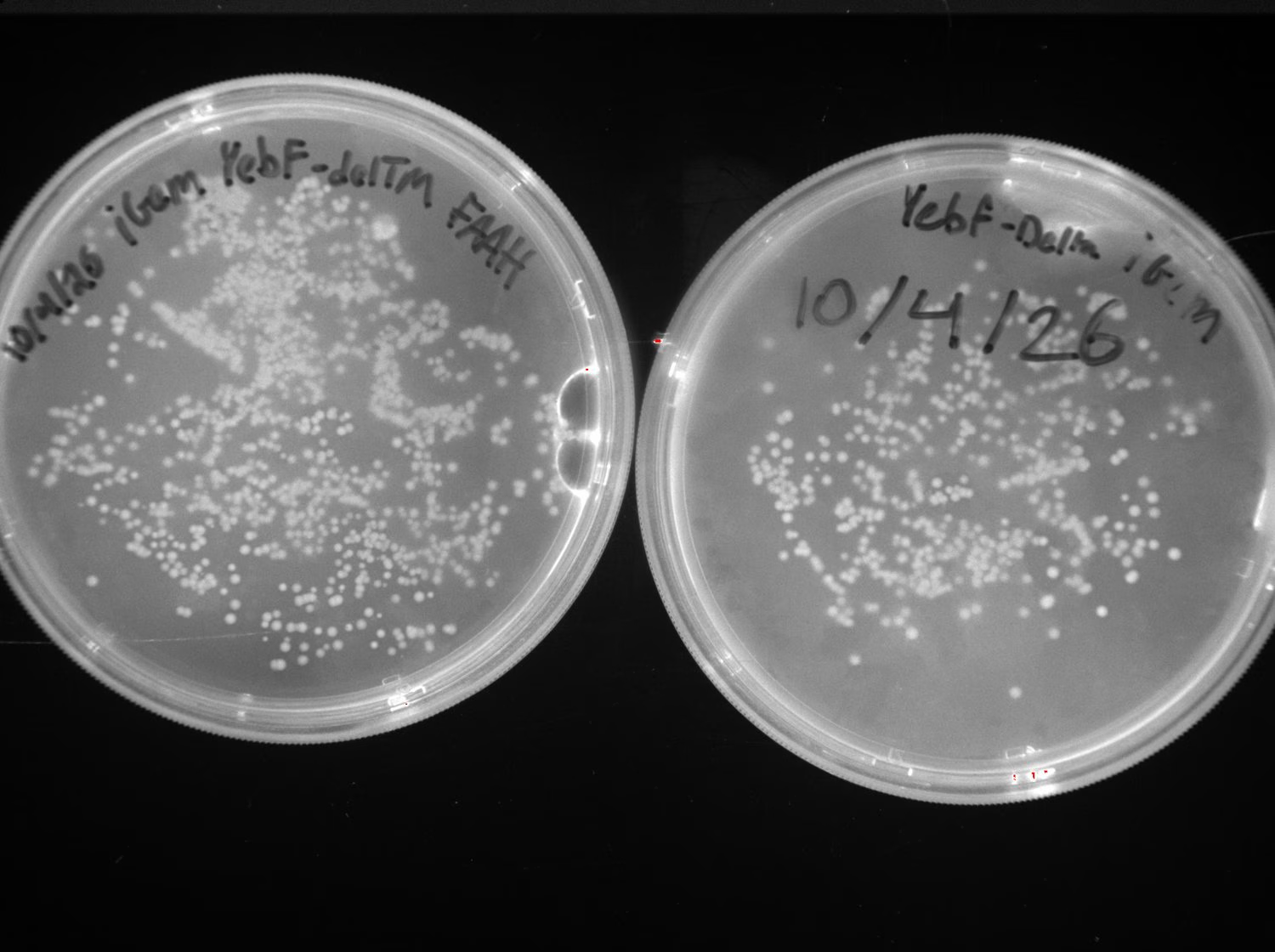
- October 4: full team transformation run to build the final probiotic strain. Transformed 6xHis-YebF-ΔTm-FAAH into EcN and plated. Both plates grew well
- October 6: picked colonies and prepared 5 glycerol stock tubes, stored at −80 °C. The strain is now banked, so later work does not depend on repeating the transformation
Where We Finished
Verified and complete: 6xHis-GFP, 6xHis-WT-FAAH, 6xHis-ΔTm-FAAH, and 6xHis-YebF-ΔTm-FAAH. Expression confirmed for the first three in BL21(DE3). The YebF secretion construct is in EcN and banked as glycerol stocks.
Still to build: the OmpA and OmpX outer membrane display constructs, for which primers are designed, and the catalytic mutant controls.
Still to run: Western blot against the 6xHis tag, TAMRA-FP active site labelling, and the OEA hydrolysis assay. The assay designs are on our Measurement page.